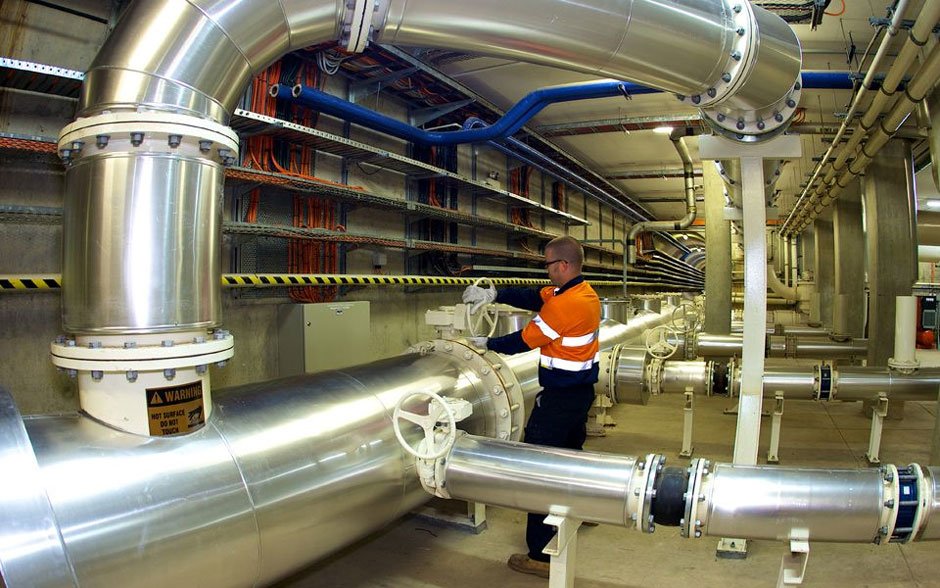
The lifeblood of any modern industrial, commercial, or residential building often flows invisibly behind walls and under floors. We are talking about the complex networks of pipes that transport water, steam, chemicals, and gases. While the pumps and boilers get the attention, it is often the seemingly small components that keep these systems running smoothly for decades. Among these crucial but often overlooked elements are expansion joints, devices engineered to absorb movement, stress, and vibration within a piping system. Understanding their purpose is not just an academic exercise, it is a prerequisite for ensuring long-term system integrity and operational efficiency.
Navigating the Challenges of Thermal Movement
A fundamental challenge in piping systems, especially those dealing with significant temperature variations, is thermal movement. Materials, particularly metals, expand when heated and contract when cooled. In a rigidly connected pipeline, this constant change in length creates immense stress. Without a mechanism to absorb this movement, the stress would inevitably lead to serious failures: pipe fracturing, leakage at welded joints, or damage to connected equipment like pumps and heat exchangers.
Consider a steam distribution system where the pipeline temperature swings dramatically between cold shutdown and operational heat. Over hundreds of metres, even a small co efficient of thermal expansion results in substantial overall length change. Expansion joints are specifically designed to counteract this. They are positioned at strategic points to compress, extend, or flex, effectively mitigating the stress caused by the pipe’s natural urge to change size.
The Crucial Role of Bellows and Their Design
At the heart of many expansion joint types is the bellows element. Often made from stainless steel or other high-performance alloys, the bellows is a flexible, corrugated shell. This corrugation allows it to move easily while still containing the pressure of the system. The selection of the correct bellows material is paramount. It must not only withstand the system’s pressure and temperature but also be chemically resistant to the conveyed medium. For instance, a system handling corrosive chemicals will require a bellows material like PTFE or a highly corrosion-resistant steel, whereas a standard water system might use a more common stainless steel grade.
The design of the convolutions, the number of plies, and the overall construction dictates the joint’s ability to handle different types of movement, including axial (along the pipe axis), lateral (perpendicular to the pipe axis), and angular movement. Single-bellows joints are common, but for complex movements or very high pressure, sophisticated designs like universal or pressure-balanced expansion joints are often deployed. Selecting the right joint for the specific application is a nuanced process that requires considerable piping expertise.
Controlling Vibration and Noise in Systems
Beyond accommodating thermal changes, expansion joints play a vital part in managing dynamic forces. Pipe vibration is a common issue, often originating from sources such as reciprocating compressors, pumps, or turbulent fluid flow. This vibration can transmit through the rigid pipe structure, leading to noise, fatigue failure in welds, and premature wear on machinery.
Flexible connections, such as rubber or composite expansion joints, are highly effective at absorbing this kinetic energy. By isolating the source of the vibration from the rest of the piping network, they drastically reduce noise levels and prevent the spread of damaging vibrations. This dampening effect is especially important in sensitive environments like hospitals or data centres, where operational noise and equipment longevity are critical concerns.
The Importance of Correct Installation and Selection
The efficacy of an expansion joint is only as good as its selection and installation. Specifying the correct joint requires a detailed analysis of the system’s operating conditions, including maximum pressure, temperature extremes, the properties of the fluid, and the magnitude of the required movement. A miscalculation in any of these areas can lead to joint failure, resulting in system downtime and costly repairs.
This is where the expertise of specialist manufacturers becomes invaluable. They can offer bespoke solutions and provide guidance on system anchoring and guiding, which are essential for directing the movement correctly into the joint. For comprehensive support and an extensive range of reliable products that meet stringent industry standards, many professionals turn to Stourflex, a reputable supplier known for its commitment to quality and technical excellence in the field of flexible pipe connectors. Their technical teams possess the deep understanding necessary to match the right product, whether it is a rubber bellows, a metallic expansion joint, or a PTFE-lined compensator, to the specific demands of the system.
Ultimately, the choice and quality of an expansion joint are not just about compliance, they are an investment in the system’s overall resilience and longevity. By effectively managing the destructive forces of thermal expansion and vibration, these quiet components secure the operational future of industrial infrastructure. Ignoring their significance is a common oversight that invariably leads to compounded issues down the line. A proactive approach, prioritising high-quality components and expert advice, is always the most cost-effective path.