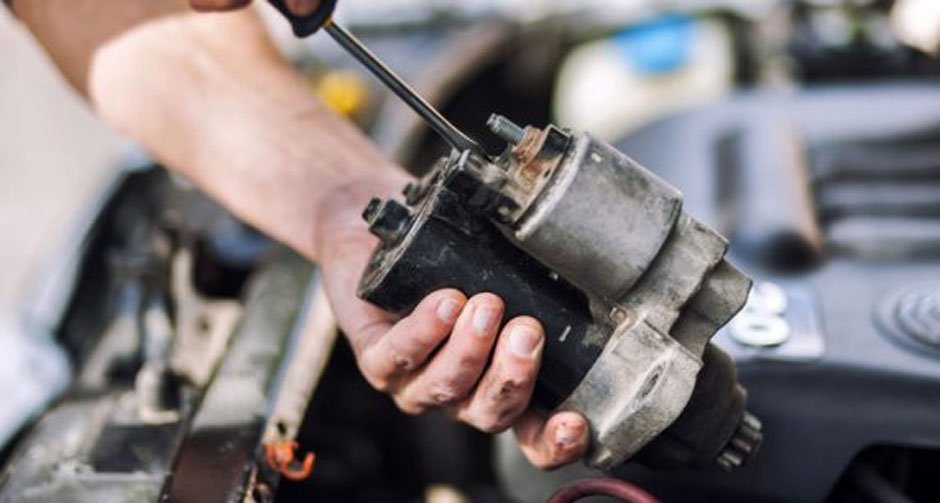
Your car’s starter motor plays a critical role every time you turn the key or press the start button. Without it, your engine simply won’t come to life.
Unfortunately, starter motor problems often develop gradually, giving subtle warning signs before complete failure. Recognizing these signs early can save you from inconvenient breakdowns, unexpected towing costs, and being stranded at the worst possible time.
In this guide, we’ll break down the top 7 signs your starter motor is failing, explain what they mean, and help you understand when it’s time to consider a starter motor replacement.
1. Clicking Sound When You Turn the Key
One of the most common signs of a failing starter motor is a clicking noise when you try to start your car. You may hear a single click or a series of rapid clicks, but the engine doesn’t crank.
This sound usually indicates that the starter solenoid is engaging, but the starter motor itself isn’t spinning the engine.
While a weak battery can cause similar symptoms, repeated clicking even with a healthy battery often points to worn starter motor components, such as damaged brushes or internal electrical contacts.
If jump-starting doesn’t solve the issue, have the starter motor inspected by a professional as soon as possible.
2. Engine Cranks Slowly or Inconsistently
When your starter motor is healthy, the engine should crank smoothly and at a consistent speed. If the engine cranks slowly, hesitates, or starts inconsistently, your starter motor may be struggling.
This happens when internal parts wear down, leading to increased resistance and reduced power output. Over time, the motor may still work occasionally but fail under certain conditions, such as cold weather or after long driving periods.
A slow crank is often an early warning sign, and ignoring it can lead to complete starter failure without further notice.
3. Grinding Noise During Startup
A grinding or metallic noise when starting your car is a serious red flag. This sound usually means that the starter gear (pinion) is not engaging properly with the engine’s flywheel.
The common causes include:
- Worn or damaged starter gear teeth
- Misaligned starter motor
- Worn flywheel teeth
If left unresolved, grinding can damage the flywheel, which is far more expensive to repair than replacing a starter motor. Avoid attempting to start the car; have it checked immediately to prevent further damage.
4. Intermittent Starting Problems
Does your car start perfectly one day and refuse the next? Intermittent starting issues are a classic sign of a failing starter motor. This problem often occurs due to:
- Loose internal connections
- Heat-soaked starter motors
- Worn electrical components that work sporadically
The inconsistency can be misleading, causing drivers to delay repairs until the starter fails completely. If your car starts only after several attempts, the starter motor is likely nearing the end of its lifespan.
5. Starter Motor Keeps Running After Engine Starts
If you hear a whirring or buzzing sound after the engine has already started, your starter motor may not be disengaging properly. This issue is typically caused by a faulty starter solenoid or electrical faults that keep the starter engaged.
This is not just annoying; it’s dangerous. A starter motor that continues running can overheat quickly and cause serious damage to itself or nearby components. Turn off the engine if possible and seek professional assistance right away.
6. Smoke or Burning Smell from the Engine Bay
Seeing smoke or smelling something burning when trying to start your car is never a good sign. A failing starter motor can overheat due to:
- Excessive cranking
- Electrical short circuits
- Internal mechanical resistance
Because the starter motor draws a large amount of current, overheating can lead to melted wires or even electrical fires in extreme cases. If you notice smoke or a burning smell, stop attempting to start the vehicle and have it towed for inspection.
7. Dashboard Lights Turn On, But Engine Won’t Start
If your dashboard lights, radio, and headlights turn on normally, but the engine won’t crank or start, many drivers assume the battery is fine, and they’re often right.
This scenario commonly indicates the battery has power, but the starter motor is not transferring that power to the engine
A faulty starter motor can prevent the engine from turning over even when all other electrical systems appear normal. A professional diagnostic test can confirm whether the starter motor is the root cause.
What Causes Starter Motor Failure?
Starter motors don’t fail overnight; they wear over time based on your driving environment and car maintenance. Common causes include:
- Normal wear and tear over time
- Heat exposure from the engine
- Oil leaks are contaminating the starter
- Electrical issues, such as corroded wiring
- Frequent short trips that strain the starting system
On average, a starter motor lasts between 100,000 and 150,000 kilometers, depending on driving habits and the frequency of maintenance.
When Should You Replace a Failing Starter Motor?
If you’re experiencing one or more of the signs above, it’s best not to wait until your car refuses to start entirely. Replacing a starter motor early can:
- Prevent unexpected breakdowns
- Reduce the risk of flywheel damage
- Save on emergency towing costs
In many cases, mobile mechanics or roadside assistance providers can diagnose and replace a starter motor on-site, minimizing downtime.
Keep an Eye on Starter Motor Warning Signs
A failing starter motor rarely gives just one warning; it usually shows several signs before total failure. Clicking sounds, grinding noises, slow cranking, and intermittent starting issues should never be ignored.
Recognizing these top 7 signs your starter motor is failing enables you to take action early, protect your vehicle, and avoid being stranded when you least expect it.
If your car is showing any of these symptoms, a professional inspection is the safest and smartest next step. A professional may identify and fix the issue or recommend a starter motor replacement.